Power steering whine: find the cause before you buy a pump
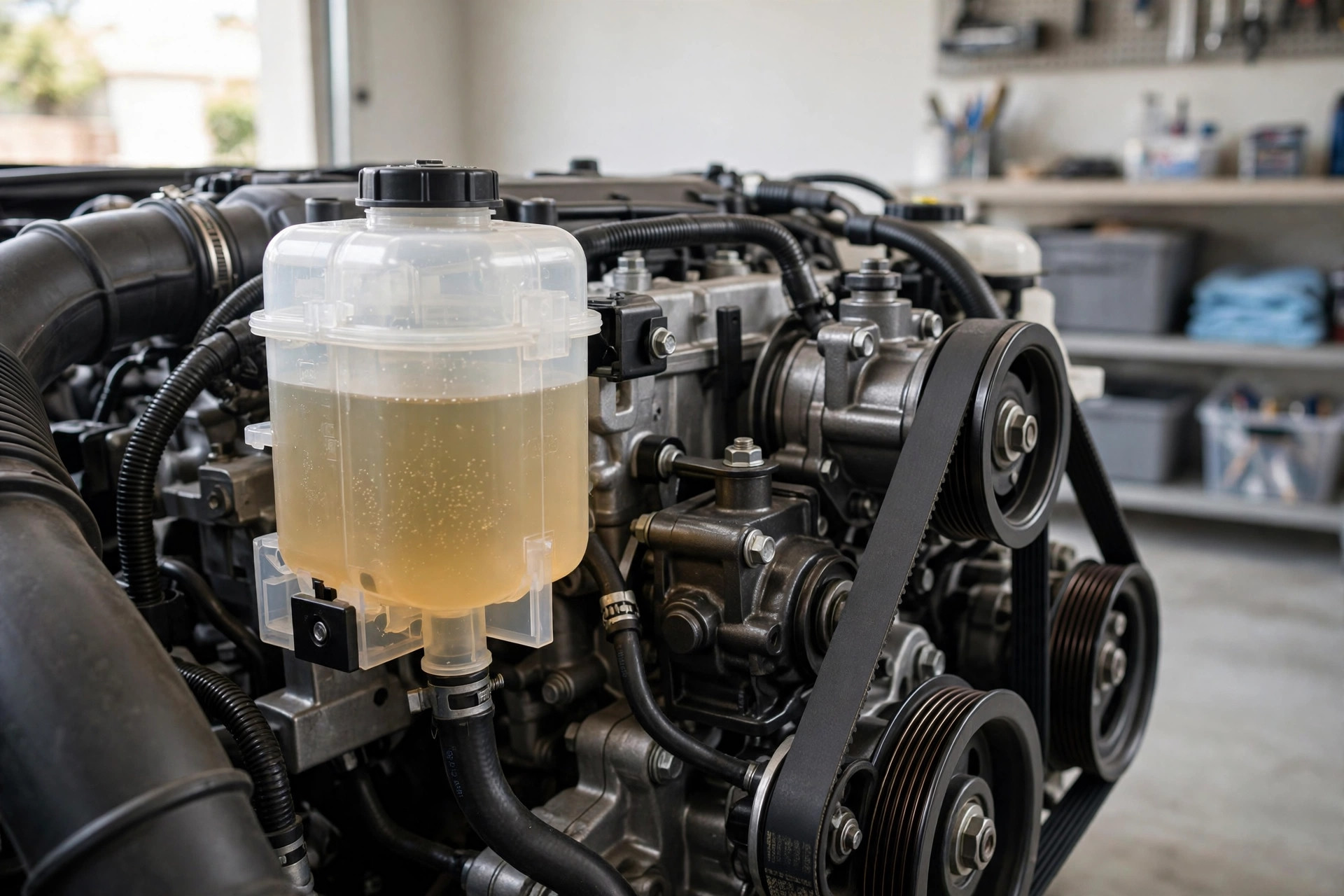
A power steering pump that whines is a pump that is unhappy — but "unhappy" is not the same as "worn out." On the Grand Caravan, the whine most often means the pump is being starved of fluid, and starvation has cheap causes. A whine that changes pitch with engine speed and gets louder when you turn the wheel points at low fluid or a failing pump — and of those two, low fluid (or fluid that cannot reach the pump) is far more common. This guide works the problem as a ladder: five rungs, cheapest first, each with a test. Do not buy a pump until the first four rungs have been honestly cleared.
Rung 1: fluid level, condition, and leaks
Start with the reservoir. Check the level against the marks with the fluid cold, and look at the fluid itself: dark, burnt-smelling fluid has been working too long, and foamy or milky-looking fluid means air is getting in. A low level is not a topping-up exercise — it is a leak report. Fluid does not get consumed; if it is low, it went somewhere.
- Clean the reservoir, hoses, pump, and the lines running to the steering rack and the cooler, so fresh wetness is visible.
- Top the fluid to the correct mark with the fluid your reservoir cap or owner's manual specifies (see Rung 4 — the spec matters on these vans).
- Work the steering lock to lock a few times, then re-inspect. A leaking cooler hose is a classic false suspect: it can drip in a way that makes the rack look guilty, so clean and re-check before condemning anything expensive.
- Drive a day and re-check the level. A level that holds with the whine gone was a level problem. A level that drops is a leak that must be fixed before anything else will stay fixed.
What success looks like: the level stays at the mark for a week of normal driving, and the whine fades once the system is full and the air is worked out. If the level was fine all along, move to Rung 2.
Rung 2: the belt that drives the pump
The pump is belt-driven, so belt problems reach it directly. Inspect the serpentine belt for cracks, glazing, and fraying, and confirm it is tracking straight on the pump pulley. A worn or loose belt usually announces itself as a squeal rather than a pure whine — worst on cold starts and during parking manoeuvres — but the inspection takes two minutes and costs nothing, and a belt that slips under steering load can change the pump's note. If the belt is tired, it was due anyway; replace it before diagnosing deeper.
Rung 3: the reservoir screen — this van's favourite trick
Here is the cause the forums bury and the parts catalogues never mention: there is a fine screen in the bottom of the fluid reservoir, and over the years it partially clogs with debris. The reservoir can read full while the pump downstream of that screen starves — and a starved pump whines exactly like a dying one. A shop answer on RepairPal names this restricted screen as the most common cause of power steering whine on these vans specifically, ahead of the pump itself.
The screen can be cleaned by removing the reservoir and flushing it out, but the same answer notes a replacement reservoir costs about US$15 — cheap enough that cleaning is the budget option, not the smart default. Either way, the job is: draw the old fluid out of the reservoir, unbolt and remove it, clean or replace it, refit, refill with fresh specified fluid, and bleed the system as in Rung 4. A clogged screen also explains a whine that is worst on a cold start and eases as the van warms: thick cold fluid struggles through a restricted screen even more than warm fluid does.
Rung 4: fluid exchange, the right spec, and a proper bleed
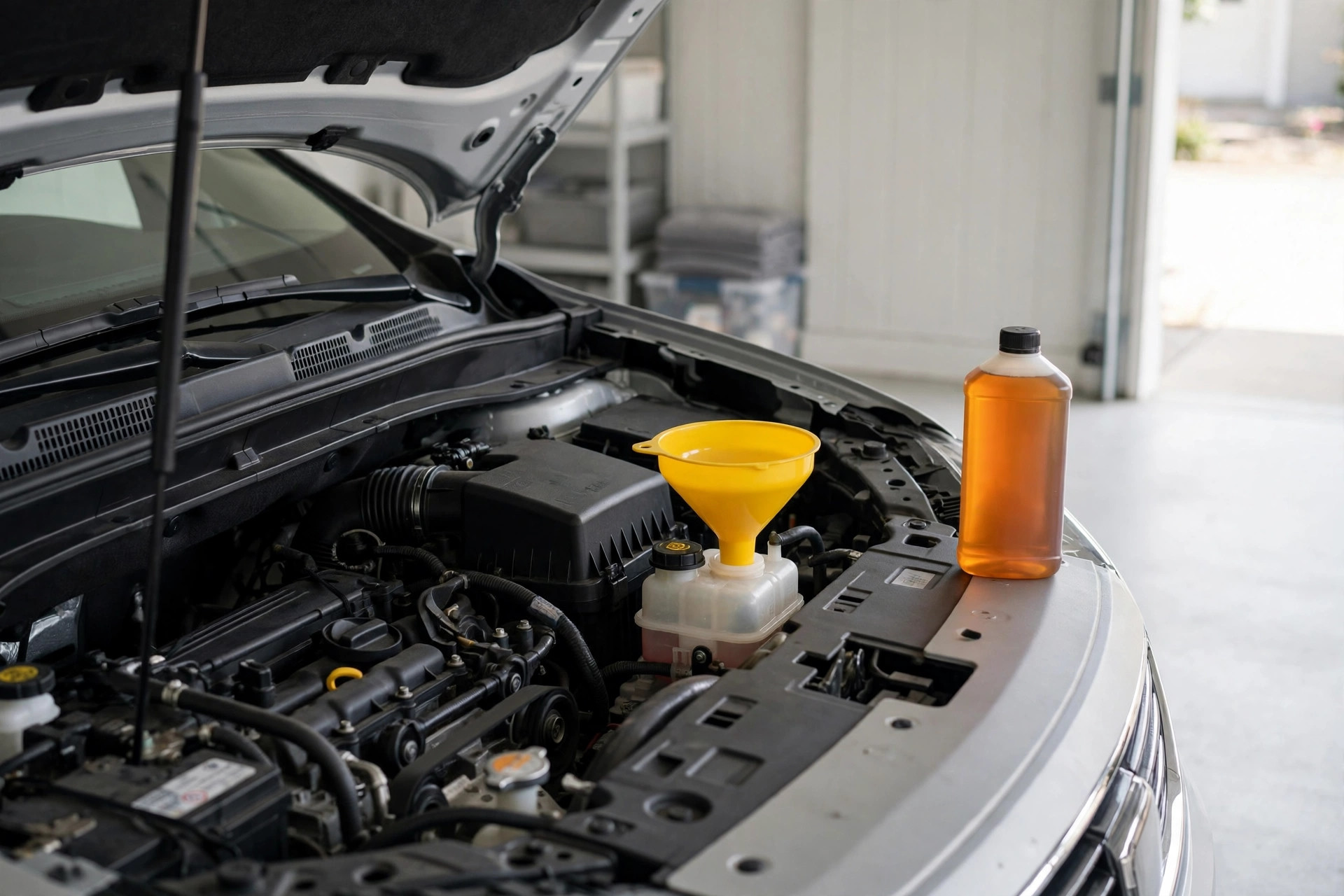
If the fluid is dark or the van's history is unknown, exchange it — and this is where Caravan owners get tripped up, because the fluid specification is not the same across all years of this van. A factory bulletin for the earlier vans specifies a dedicated power steering fluid (part number 04318085) and warns in capitals: do not use automatic transmission fluid. Other years call for a different Mopar specification. The generic advice to use "the correct type" is useless without the next step: read the reservoir cap and your owner's manual, and buy the fluid named there — not whatever the shelf label suggests.
Fresh fluid only helps if the air comes out. The factory fill-and-bleed procedure in that same bulletin is a good template:
- Fill to the "Full Cold" mark and let the fluid settle for at least two minutes.
- Start the engine for about ten seconds, switch off, and re-check the level; top up to Full Cold and let it settle again.
- Raise the front wheels off the ground, start the engine, and slowly turn the steering wheel lock to lock, just touching the stops. Switch off and re-check.
- Lower the van and repeat the lock-to-lock turns on the ground, then check the level one last time.
- If the fluid is extremely foamy at any point, stop: let the van sit for ten minutes so the air separates, then repeat the sequence.
One reassurance from the bulletin: some steering shudder immediately after a fluid fill is expected, and it lessens considerably with added mileage. A shudder on day one after fresh fluid is not, by itself, a failed repair.
Rung 5: when it really is the pump
Condemn the pump only when the evidence survives the ladder: correct fluid at the correct level, no leaks, a healthy belt, a clean or new reservoir screen, a full bleed — and the whine persists, hot and cold, rising with engine speed and steering load. At that point the pump's internal bearings or vanes are the remaining suspect, and replacement is justified rather than hopeful. The ladder is the point: three of the four cheaper rungs are also maintenance the van needed regardless, so the money spent ruling them out was not wasted even when the pump does turn out to be the answer.
Frequently asked questions
The reservoir is full, so the pump can't be starving — right? Not necessarily. A partially restricted screen in the bottom of the reservoir can starve the pump while the fluid above it reads full. That is Rung 3, and it is the most common Caravan-specific cause.
Can I just top up with any power steering fluid, or ATF? No. The specification varies by year — a factory bulletin for earlier vans specifies a dedicated power steering fluid and explicitly warns against automatic transmission fluid. Use what the reservoir cap or manual names for your van.
The whine is only there on cold mornings. Does that change the diagnosis? It supports it. Cold fluid is thicker, so a marginal restriction — the reservoir screen above all — starves the pump worst at a cold start and eases as things warm up.
How urgent is a whine? A starved pump is wearing while it whines, and the cause is usually cheap at the top of the ladder. Work the rungs promptly rather than waiting for the noise to become a steering failure.